Today I am going to talk about LSA types. As you probably already know, OSPF routers in the same area have a database (LSDB) full of LSAs. This LSDB serves as the network topology map from which routes are created. LSAs can also extend to inter-areas and certain LSAs are meant for the entire OSPF AS/domain. Different types of LSAs serve different purposes.
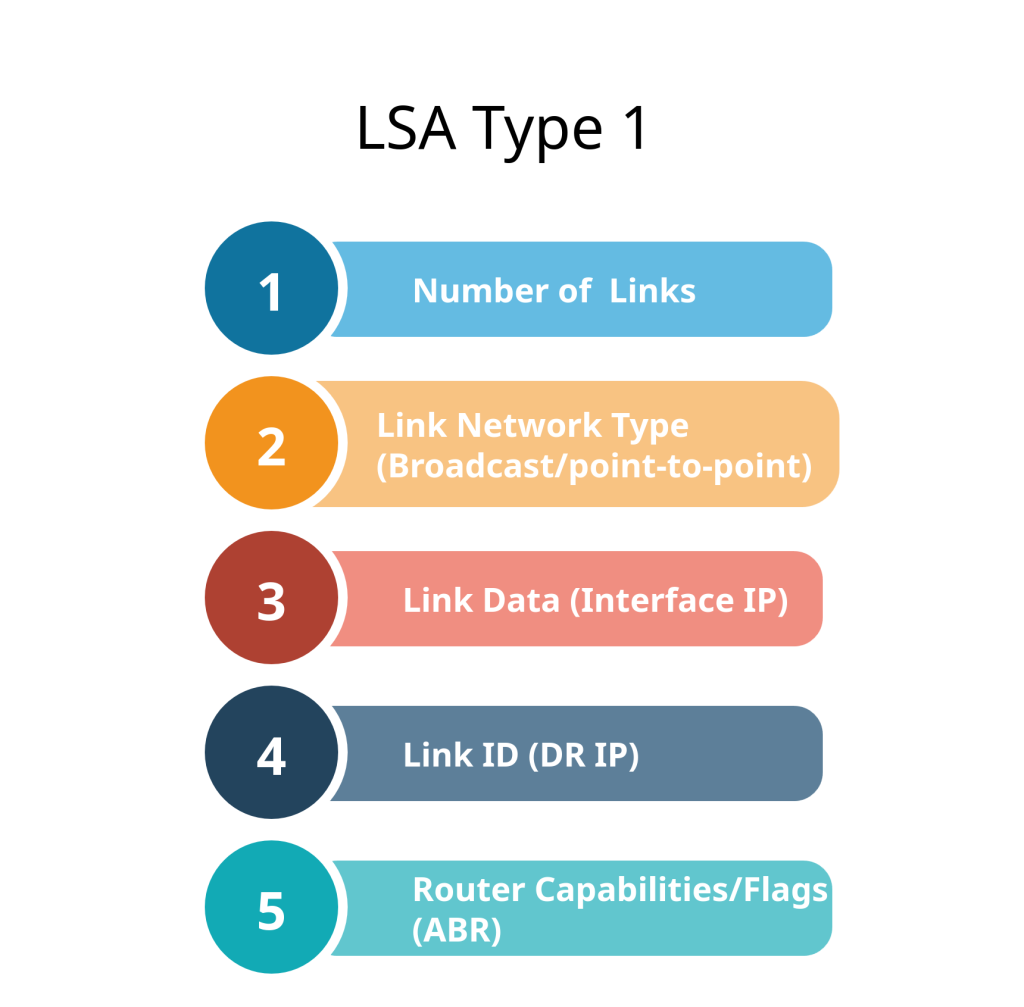
Type 1- The first LSA I am going to talk about are LSA Type 1 which are also known as Router LSAs. These LSAs are generated by every router in the intra-area, and are used to describe directly connected links. LSA Type 1s are used to calculate the intra-area routes via SPF which is the most preferred route in the OSPF AS. The information that is found inside of a Type 1 LSA is Link Network Type (broadcast, point-to-point), Link ID (DR IP address), Link Data (Interface IP address), router capabilities/flags (ASBR, ABR), and the number of links.
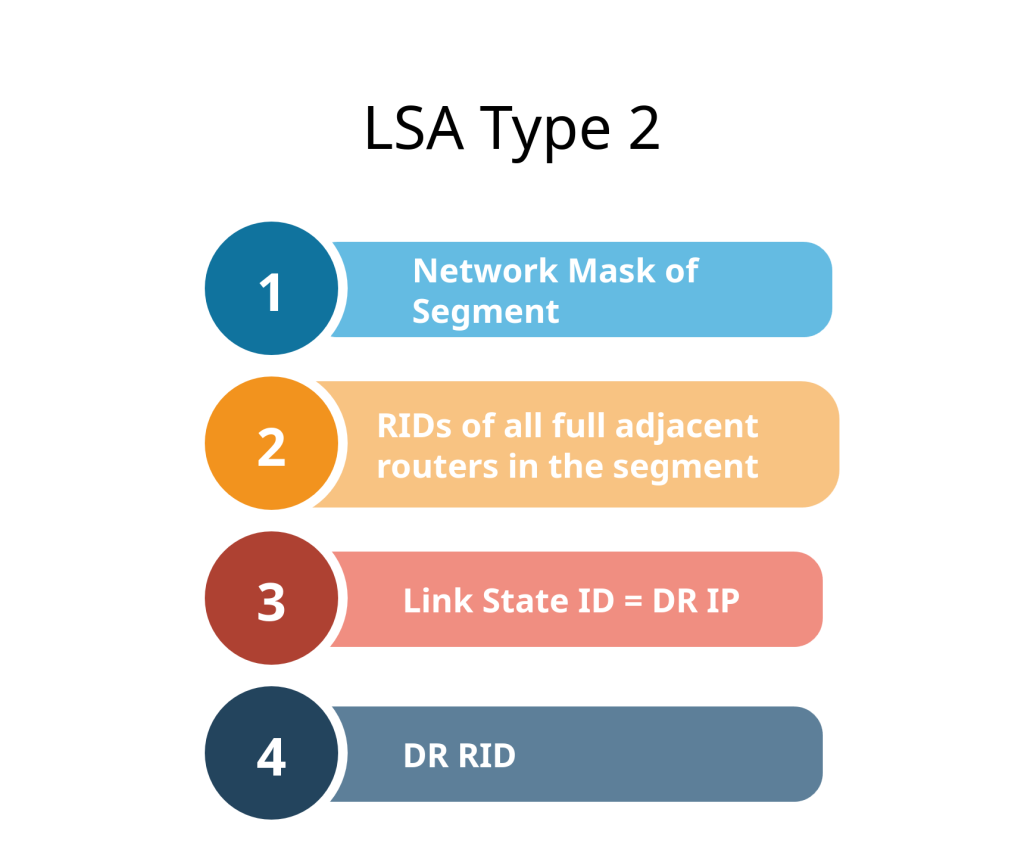
Type 2- Another type of intra-area LSA is a Type 2 LSA which is also known as a Network LSA. This is an LSA that is used to describe the entire network segment and all the routers that are a part of it. The purpose is so that every router knows every other router that exists on the same network segment as it. Inside a Type 2 LSA you will find the network segment subnet mask, the RIDs of all attached routers that reached a full adjacency, the links state ID (DR IP address), and the DR’s RID. Unlike a Type 1 LSA, a Type 2 LSA is only produced by the DR, meaning point-to-point networks do not flood Network LSAs. A network LSA is intra-area as well meaning it is used to calculate the most preferred route in the OSPF domain which is an intra-area router ( represented as O on the routing table.)
Type 3- The third LSA is called a summary LSA and is vital to allow inter-area routing. ABRs generate a Type 3 Summary LSA for each network in an area and floods them into other areas. When an OSPF topology first comes online, once the intra-area routes are calculated, the ABR runs an SPF in every non-backbone area it is directly attached to, then makes a Summary LSA for every single network in those areas. So if an ABR is connected to 4 networks that are not the backbone network, it will create 4 Summary LSAs, one LSA per network. Once other ABRs receive those Type 3 Summary LSAs they will calculate routes to the ABR that sent the Summary LSAs via SPF, and flood the Summary LSAs to the other non-backbone areas it is connected to. The routers in those non-backbone areas (the areas connected to the ABR) will then install those summary routes into their table pointing to the ABR as the next hop. Inside a Summary LSA you will find the destination network mask and metric.
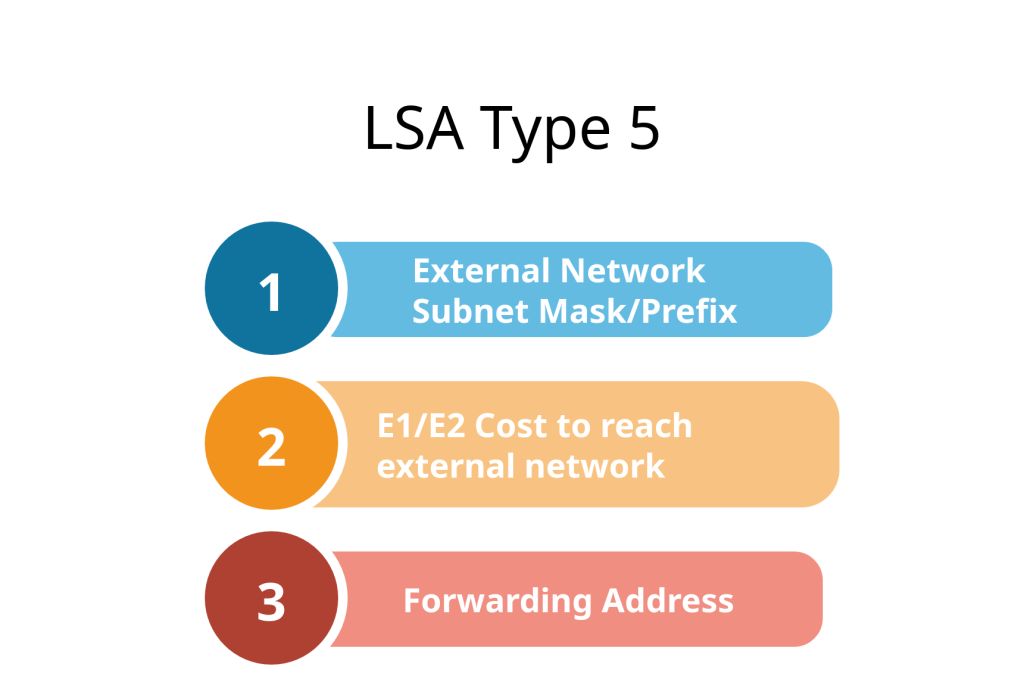
Type 5- The last LSA that I am going to talk about today is the Type 5 External LSA. External LSAs are generated only by the ASBR. External LSAs are routes to external networks that have been redistributed into the OSPF domain. These routes can come from any protocol such as static, BGP, EIGRP, ISIS, or even another OSPF domain. Type 5 External LSAs are flooded throughout the entire OSPF AS/domain except stub areas, so every area has routes that are external to the network. Inside a Type 5 External LSA you will find the destination network mask/prefix, cost to reach it (E1/E2), and the forwarding address. E1 is the cost to reach the ASBR plus the cost to reach that external network. E2 is only the cost to reach the external network from the ASBR. By default, E2 routes are installed in routing tables.
Leave a Reply