NAT is a mechanism performed by a router that translates private IP addresses in the RFC 1918 range to one or more globally unique public IP addresses that can be routed over the Internet. In NAT there are specific names of these addresses. In NAT there is an inside local, inside global, outside local, and an outside global.
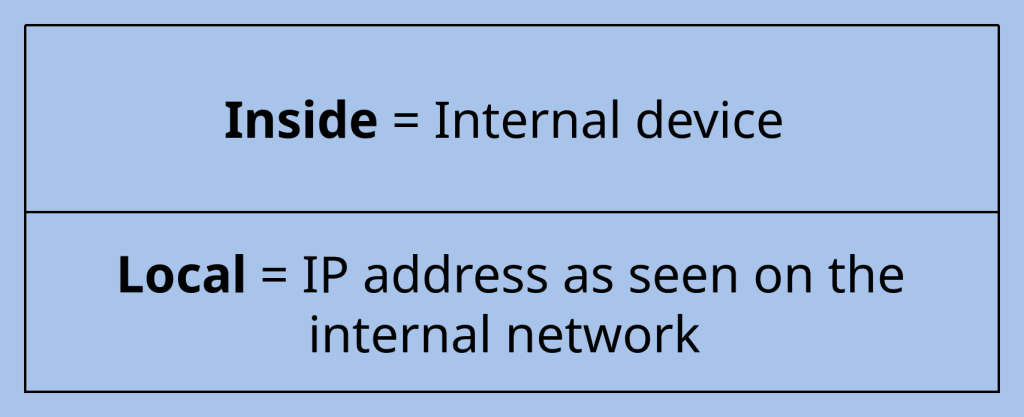
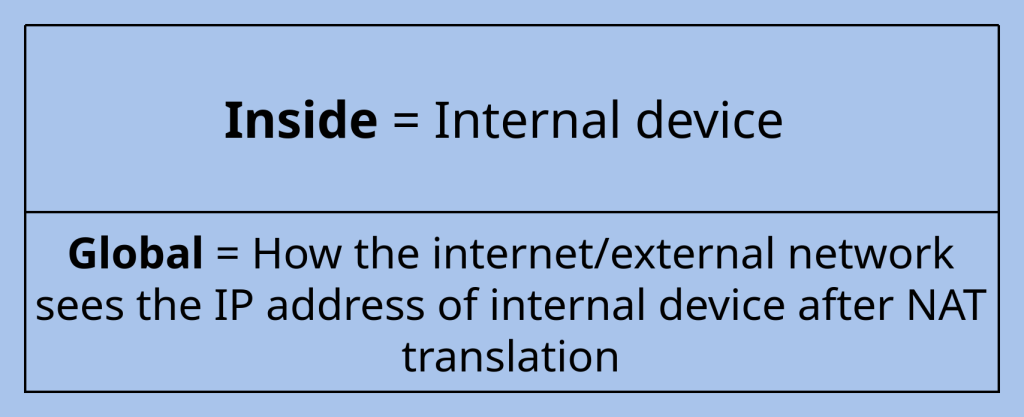
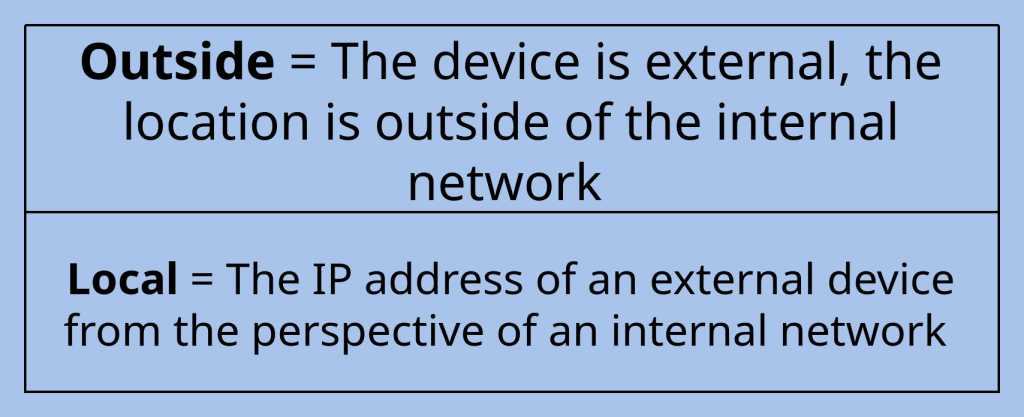
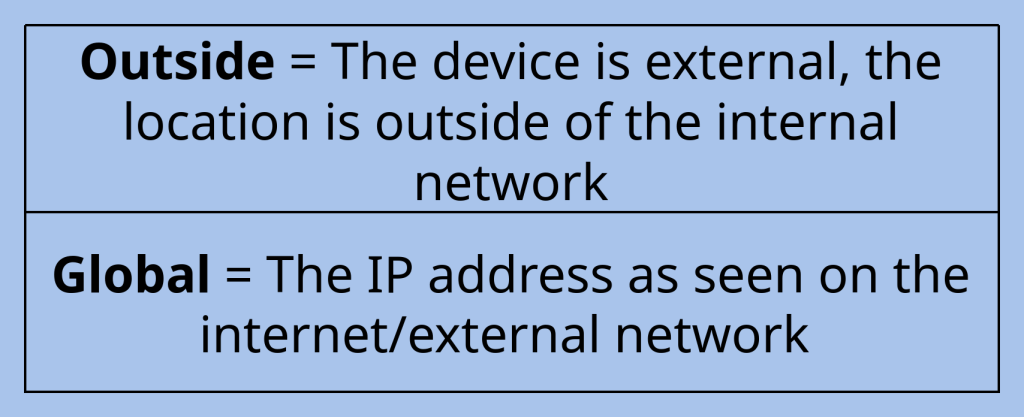
1) Inside/Outside = The location of the device relative to the NAT router
- Inside = The device is located in a private LAN/internal network
- Outside = The device is located outside of the private LAN/private network
2) Local/Global = Refers to the side of the NAT router at which the IP address is being viewed from.
- Local = The IP address as it appears from the internal network before NAT translation
- Global = The IP address as it appears from the external network after NAT translation
Inside Local- An inside local is the IP address that represents the internal device on a private LAN before any NAT translation is done. These are the IP addresses in the RFC 1918 range that are only routable in the LAN.
Inside Global- An inside global address is the public IP address that represents an internal device of a private LAN when communicating with the external network. This address is globally unique and routable on the public internet.
Outside Local- An outside local address is the IP address of an external device as it appears to the internal network. This is how an IP address looks from the perspective of internal hosts or devices.
Outside Global- An outside global address is the actual public IP address of an external device as it exists on the external network. This is the official globally unique address that can be routed over the internet. This is the IP address that is seen by anyone in the external network(internet).
Leave a Reply