Author: Author: Richard Pateau
-
IPv4 and Binary
Today we are going to talk about IPv4 which stands for internet protocol version 4. An IP is a logical address that is used in layer 3 to identify host addresses, default gateways, loopback interfaces, and router interfaces. An IP address is much like a home address, where it represents where to send something to…
-
Input and Output Errors
Today we’re going to dive into input errors and output errors. Input and output errors can be found under the “show interface” command on cisco CLI. These are usually just a counter that increments every time a specific error happens that stops a frame from being successfully transmitted. Whenever the input or output error increases,…
-
Encapsulation/Decapsulation
If you’re studying for network+, CCNA, or just anything networking you are going to encounter the word encapsulation and decapsulation A LOT. Encapsulation and decapsulation is the heart of how computers are even able to talk to each other. You most definitely would not be viewing this right now if bits never turn into signals…
-
Ethernet Frame
Today we’re going to dive into an Ethernet Frame header and trailer, and what it entails. Frames are a Layer 2 PDU(Protocol Data Unit) that gets forwarded between hosts that are usually in the same broadcast domain or VLAN. Ethernet frames are also vital for transporting packets across networks because a new ethernet frame header…
-
Cisco CLI – User vs Privilege
Hello everyone, today we’re going to talk about certain privileges when it comes to using the CLI. The CLI means command line interface and this is how you tell network devices such as routers or switches how to behave via protocols and configurations. The CLI has different user privileges that can be used for stuff…
-
Auto-negotiation/FLP
Today we will be discussing layer 2 switches and auto negotiation. Links on switches can operate at varying speeds such as 10, 100, or even 1000Mbps. Switches can also operate on half-duplex and full duplex. So say I have two switches but they’re running different settings but I want them to form a link together.…
-
CSMA/CD
Hi, today we are going to dive into a feature called CSMA/CD which stands for Carrier Sense Multiple Access Collision Detection. This is a protocol mostly used by Ethernet NICs when they are connected to half-duplex networks such as being connected to ethernet hubs and plays an important role in handling what to do after…
-
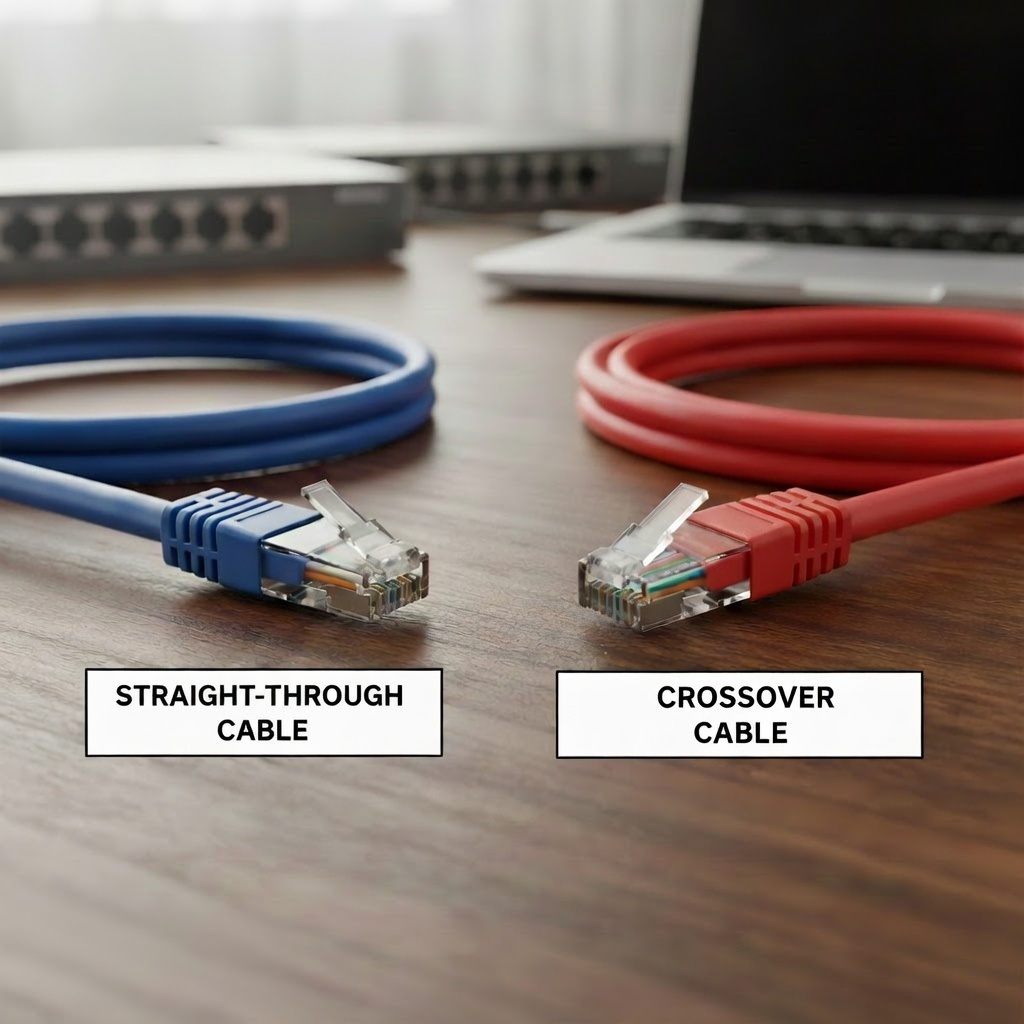
Straight-Through vs Crossover Cables
Today I will be discussing straight-through cables and crossover cables. Straight-through cables and cross over cables both have their use cases. They both serve an important purpose and can’t just be used any way you want to, well because of new technology we can but for the sake of learning the purpose we will dive…
-
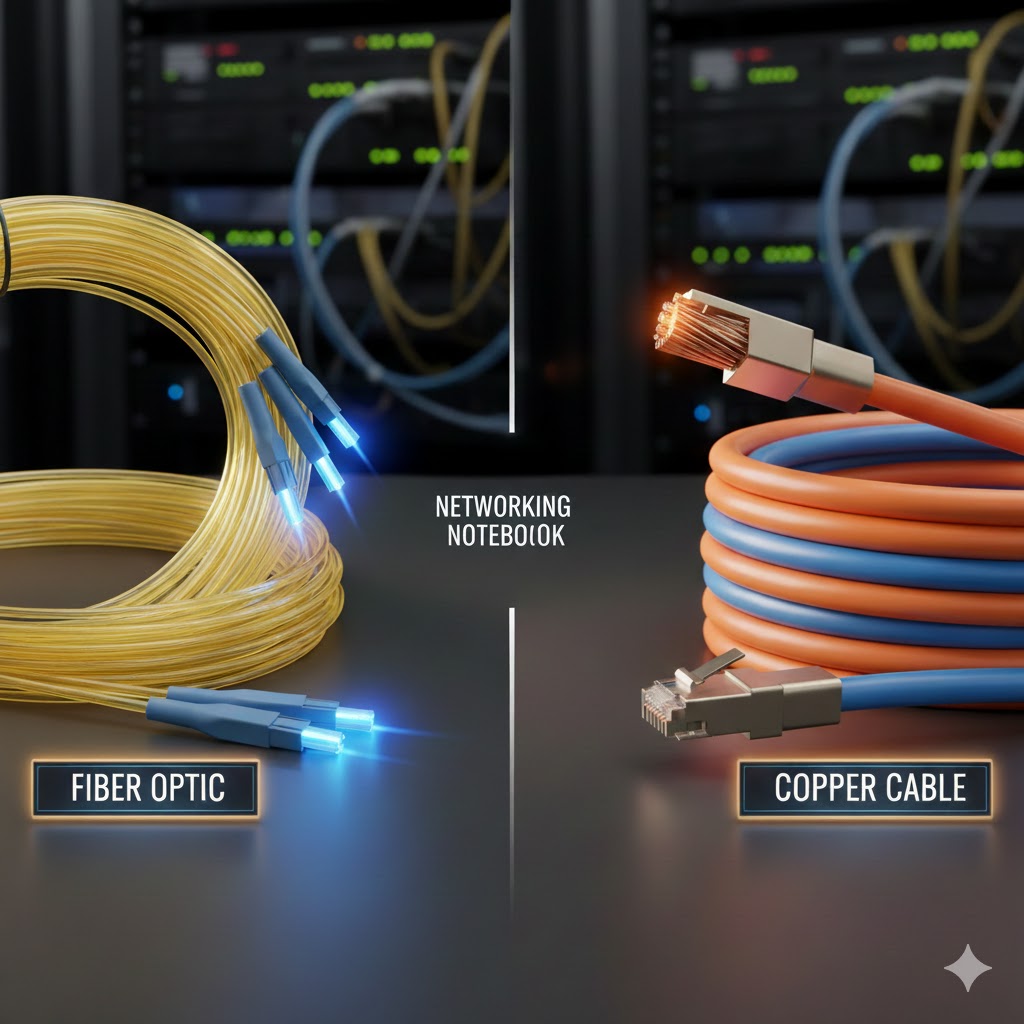
Cables: Copper vs Fiber
Twisted Pair Cables Hello everyone, today we are going to talk about cables, specifically copper cables and fiber cables. Copper and fiber optic cables both have their pros and cons, so let’s talk about it. Copper is an IEEE 802.3 standard that carries electrical signals from the transmitting end to the receiving end and vice…
-
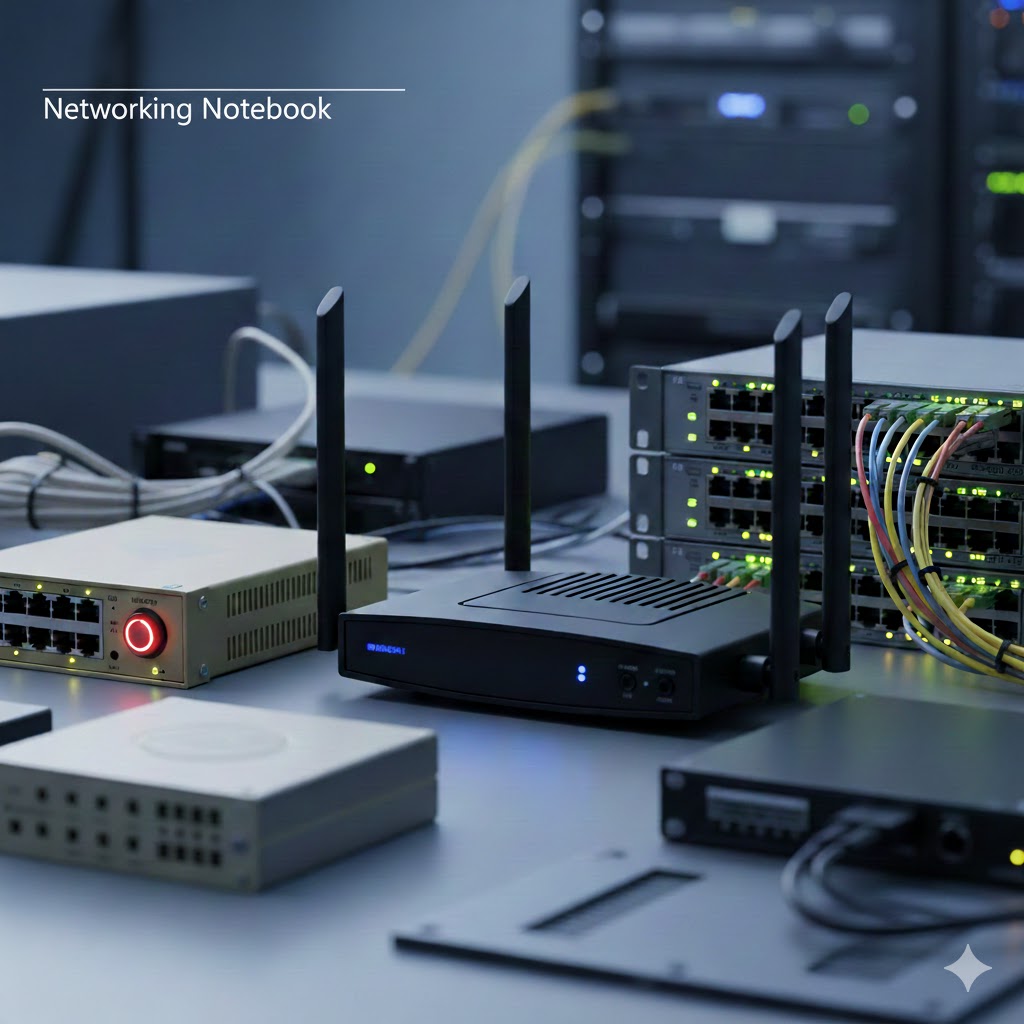
Network Devices
ETHERNET HUB Hello everyone, today we are going to talk about common network devices. The first device we’re going to talk about is the Ethernet Hub. This is a physical layer device that acts as a multiport repeater. What does that mean you ask? It means that when a signal is transmitted out of one…